
THE BUILDING PRODUCT E-BULLETIN
THE BUILDING PRODUCT E-BULLETIN
26 November 2026

Anton Mill, Anton Mill Lane, Andover, Hampshire, SP10 2NX
T: 01264 339090
E: liftsales@stannah.co.uk
W: https://www.stannahlifts.co.uk
When it comes to creating seamless guest experiences in hotels, resorts and other hospitality environments, lifts are more than just a convenience, they are essential to enhancing accessibility, safety, and efficiency.
Lifts for hotels
The key is having the right number of lifts to reduce waiting times and improve overall customer experience. Choosing the right lift depends on the specific needs of the environment, including passenger capacity and operational requirements. Equally important is selecting a lift that blends seamlessly with its surroundings, especially in contemporary boutique hotels. A wide range of finishes is available to complement any design vision, whether modern, classic or something entirely bespoke.
Passenger lifts
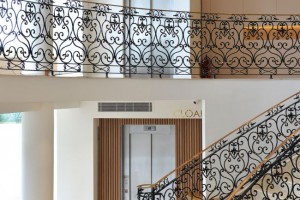
For larger hotels, a passenger lift should always be the first choice. Ideally, it should have the capacity to hold 8 people, though this depends on the number of guest rooms and floors. For smaller hotels, if a passenger lift is not practical, a platform lift can be considered an alternative.
Passenger lifts are designed to transport people quickly between floors, often travelling at speeds exceeding 0.15 metres per second. Passenger lifts can accommodate a range of capacities from three to over 30 people, making them perfect for busy hotel lobbies and leisure centres. In the UK, passenger lifts are governed by the Lifts Regulations 2016, which ensure they adhere to strict safety and operational standards.
Modern passenger lifts can be tailored to suit the needs of hospitality spaces. For example, lifts in high-rise hotels may require evacuation and firefighting controls and robust finishes to withstand heavy daily use.
Platform lifts
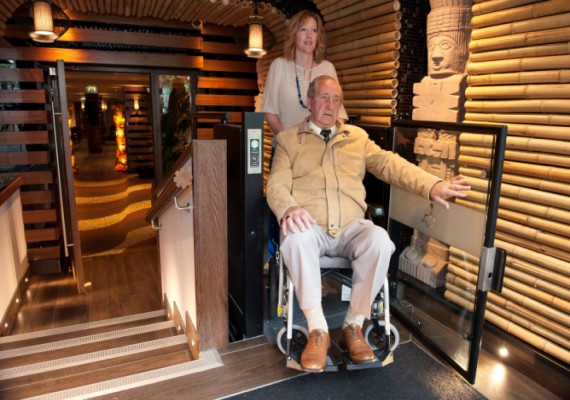
Platform lifts are designed to support guests with mobility impairments, including wheelchair users. Their versatility makes them perfect for boutique hotels and low-rise buildings where space is limited and installing a full passenger lift isn’t feasible.
Suitable for lighter traffic, platform lifts can carry up to five passengers and travel shorter distances, often up to 12 metres. The reason behind the shorter distance is that they conform to the Machinery Directive and so travel at a speed of less than 0.15m/s and many have hold-to-run operation for added control. Platform lifts are subject to the Supply of Machinery (Safety) Regulations 2008.
With options ranging from platform stairlifts and low-rise step lifts to fully enclosed cabin lifts, platform lifts provide a practical solution for a variety of settings. Hospitality settings with a step change or more than one floor should look to install a platform lift to enable step-free access for all. This can be a simple step lift where steps can be an obstacle to overcome or a larger platform lift to enable easy movement for people, pushchairs, and light goods between floors. Most platform lifts can be fitted in 1-2 days, meaning minimal disruption.
Lift solutions for back of house operations
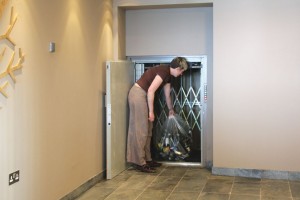
For back-of-house, service lifts are crucial yet often underappreciated, with dumbwaiters and larger goods lifts playing a vital role. These lifts discreetly maintain operations, allowing staff to focus on faultless service, whether it’s a dumbwaiter moving food and drink or a larger goods lift that takes hospitality essentials such as laundry or beer barrels.
Partnering with a reputable service provider
Look for a lift company prepared to work around your customers and busy periods to minimise disruption. Our engineers are fully qualified and have years of experience, maintaining and repairing all types of lifts, not just Stannah. We’d always recommend a 24/7 maintenance package to ensure ongoing support when you need it.
The importance of using an experienced company to find the right solution for a hospitality project should never be underestimated. See why thousands of hospitality venues choose Stannah at www.stannahlifts.co.uk.
View Previous Article
Wallbarn’s Class A rated substructure delivers hospital first

TSP Media
Grosvenor House
Central Park
Telford
TF2 9TW