
THE BUILDING PRODUCT E-BULLETIN
THE BUILDING PRODUCT E-BULLETIN
18 December 2025
Clifton Works, Hillfoot Road, Sheffield, UK, S3 8AA
T: 0114 206 1113
E: info@reclaimedbrickcompany.co.uk
W: https://reclaimedbrickcompany.co.uk/
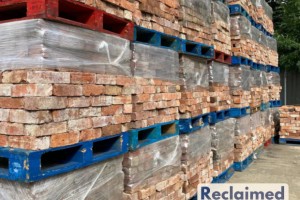
Reclaimed bricks are increasingly recognised as one of the most sustainable building materials available, offering a unique combination of historical character, performance, and environmental responsibility. In today’s construction sector, where reducing embodied carbon, minimising waste, and supporting circular resource use are essential, reclaimed bricks provide a tangible solution that meets both aesthetic and ecological objectives. Their appeal spans heritage restoration, new-build projects, and innovative design schemes, making them a practical choice for specifiers, contractors, and developers seeking materials that deliver measurable environmental benefits.
One of the most significant environmental advantages of reclaimed bricks lies in their dramatically lower embodied carbon compared to newly manufactured bricks. The production of new clay bricks requires energy-intensive kiln firing, raw clay extraction, and often long-distance transport, all of which contribute heavily to greenhouse gas emissions. By contrast, reclaimed bricks bypass most of these processes. Salvaged from demolished or renovated structures, they are cleaned, sorted, and reused without high-temperature firing. This can result in up to a 95% reduction in lifecycle carbon emissions, depending on project logistics and sourcing proximity. For projects targeting net-zero carbon, BREEAM accreditation, or RIBA’s 2030 Climate Challenge, specifying reclaimed bricks is an effective, low-carbon solution.
In addition to carbon savings, reclaimed bricks help divert construction and demolition waste from landfill. Millions of tonnes of brick rubble are generated annually in the UK, much of which historically ended up as waste. By repurposing these bricks, developers reduce landfill volumes, extend the life of materials, and support circular economy principles. Each reused brick represents a resource already manufactured, reducing the need for new raw materials and decreasing the environmental impact of construction. Using eco-friendly bricks in this way demonstrates a commitment to sustainable building practices.
Reclaimed bricks also contribute to green building certifications and ESG compliance. Projects using reclaimed materials can earn BREEAM credits in categories such as responsible sourcing (MAT 03), materials (MAT 01), and construction waste management (WST 01/WST 02). In addition, using low-carbon bricks helps developers meet corporate ESG goals by demonstrating environmental stewardship, circular material use, and heritage preservation. For socially responsible projects, reclaimed bricks provide a clear and verifiable pathway to sustainability.
Durability is another key advantage. Many reclaimed bricks are salvaged from buildings over a century old, proving their resilience and dimensional stability. This long-term performance reduces the need for frequent maintenance or replacement, further lowering the material’s environmental footprint. Additionally, reclaimed bricks are inert and free from harmful chemical additives, making them suitable for sensitive environments such as schools, hospitals, and residential developments prioritising indoor air quality.
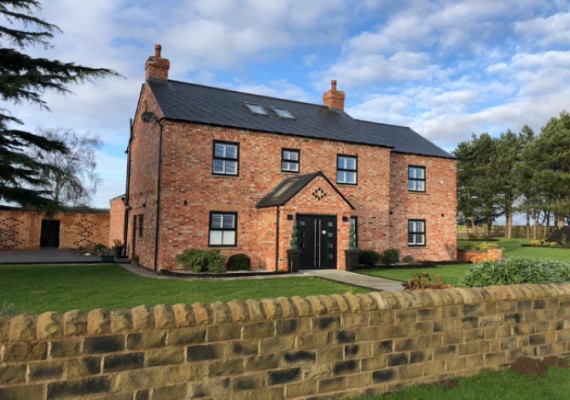
The versatility of reclaimed bricks further enhances their sustainability. They can be used in new builds, extensions, heritage restorations, garden walls, pathways, and internal features. Bricks originally laid with lime mortar can often be reclaimed again in the future, perpetuating their lifecycle and maximising resource efficiency. Sourcing locally also minimises transport-related emissions while preserving regional architectural character. By combining sustainable bricks with thoughtful design, developers can create projects that are both environmentally responsible and visually authentic.
Reclaimed bricks also integrate seamlessly with modern building methods. They can be incorporated into traditional masonry, brick slip systems, or composite wall assemblies, allowing designers to achieve desired aesthetics without compromising sustainability. Installation is straightforward for professional masons, and using reclaimed materials does not require specialised skills beyond standard brickwork techniques.
In conclusion, reclaimed bricks offer an unparalleled combination of environmental, aesthetic, and practical advantages. They provide substantial reductions in embodied carbon, divert waste from landfill, enhance BREEAM and ESG compliance, and offer proven long-term performance. Their reuse supports circular economy principles, promotes architectural heritage, and delivers low-carbon solutions for modern construction. For architects, specifiers, and developers seeking UK brick suppliers who can provide reclaimed, durable, and environmentally responsible bricks, the Reclaimed Brick Company offers a trusted, high-quality source that meets the demands of today’s sustainable building projects.
View Previous Article
Armstead Trade Durable Matt

TSP Media
Grosvenor House
Central Park
Telford
TF2 9TW